Breaking the Game
An online course combining narrative scrollytelling, gamification and educational content into an immersive web platform, helping young people reflect on their gaming habits, spot risks early and take control.
Why gaming needs a second look today
According to a study by DAK health insurance, 15.4% of minors count as “at-risk gamers”, around 465,000 adolescents in Germany. To address the problem, the Internet Addiction research group at University Hospital Tübingen developed concepts for prevention and low-threshold support services.
In a pitch, we convinced the jury with our concept for an interactive scrollytelling website: a narrative comic world in six levels, combined with self-reflection modules, developed together with University Hospital Tübingen, em-faktor and counselling centres across Baden-Württemberg.
A second chance for Jade
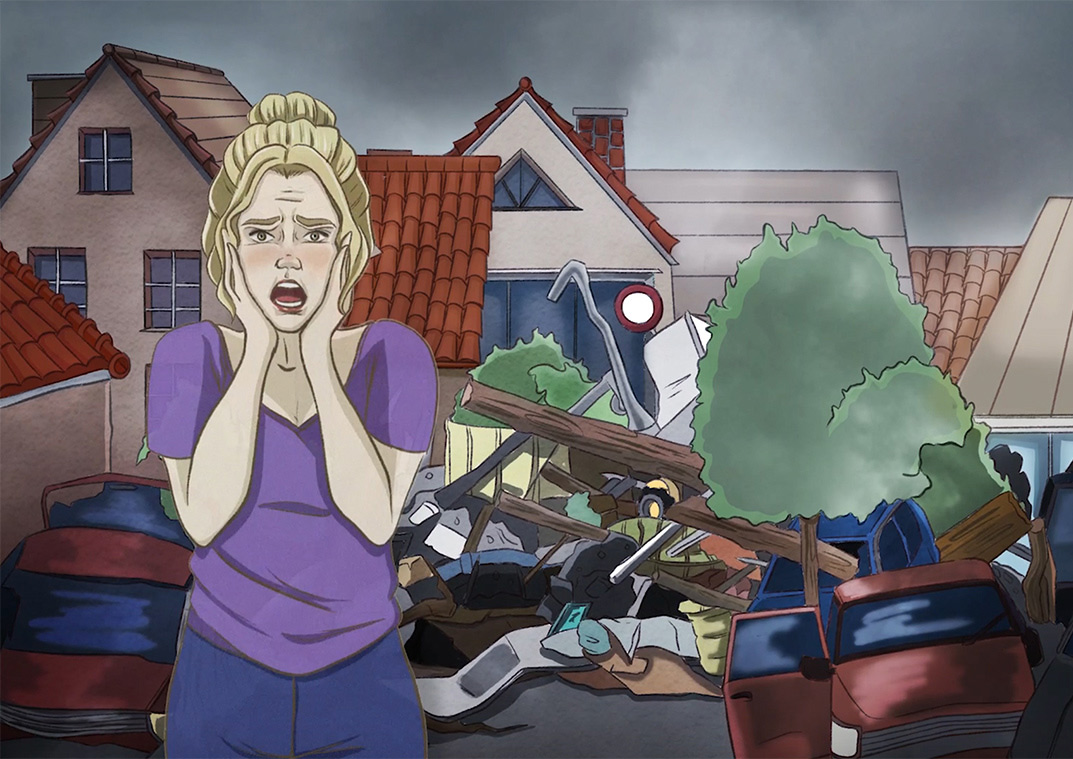
The story centres on Jade: shy, a little chaotic, but highly gifted. Together with his friends Val and Mio he is working on an ambitious research project: teleporting a hamster into space. But Jade’s passion for video games becomes his undoing: at the big competition, the teleporter explodes.
The team gets a second chance, and Jade faces the decisive question: can he manage to change his behaviour, or will he gamble it all away again?
Learn, reflect, change
While the story strand follows Jade’s challenges, the interactive part addresses users directly: they examine their own gaming behaviour, reflect on habits and playfully learn strategies to manage their gaming more consciously.
Across six levels they accompany Jade on his journey, from recognising their own behaviour (levels 1–2) and setting personal goals and self-control (levels 3–4) to stress strategies and strengthening offline relationships (levels 5–6). The charming helper Bytebot guides them through the modules.
The problem vortex
When everyday tasks feel overwhelming, gaming can appear to be the only way out. Users playfully learn to recognise when the vortex begins and how it affects their own lives.
Needs Tetris
Activities are arranged like Tetris blocks, with visual feedback on which areas of life are falling short and how time can be better balanced.
The priority deck
By playing cards, users reflect on where they want to place their focus and make conscious decisions for a balanced gaming and everyday life.
Lasting awareness, playfully taught
Breaking the Game is a low-threshold, anonymous and free online course for 12-to-25-year-olds, with voluntary access to professional counselling centres in Baden-Württemberg. Discover it now at breakingthegame.de.