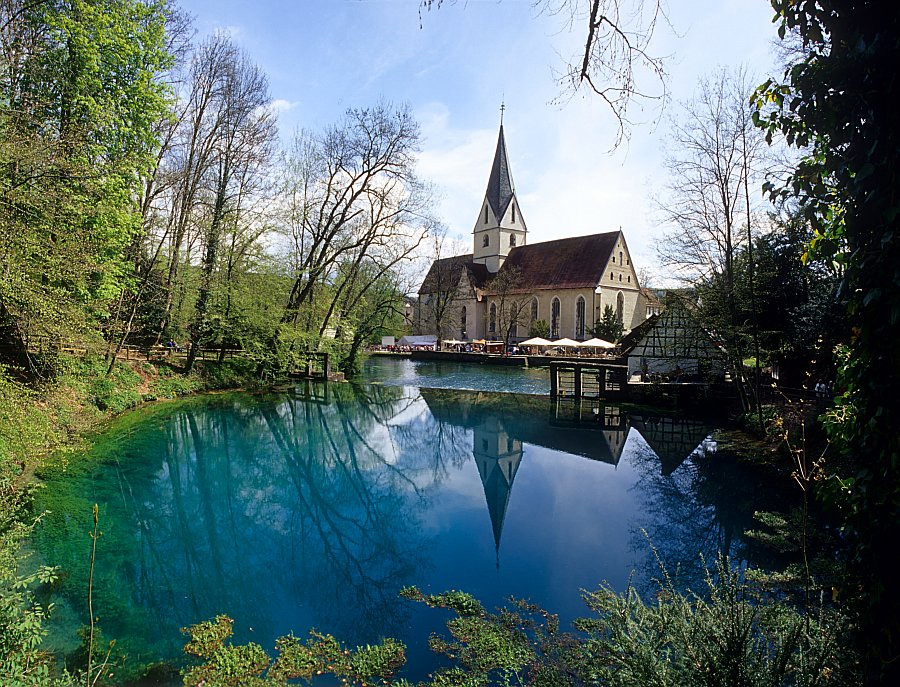
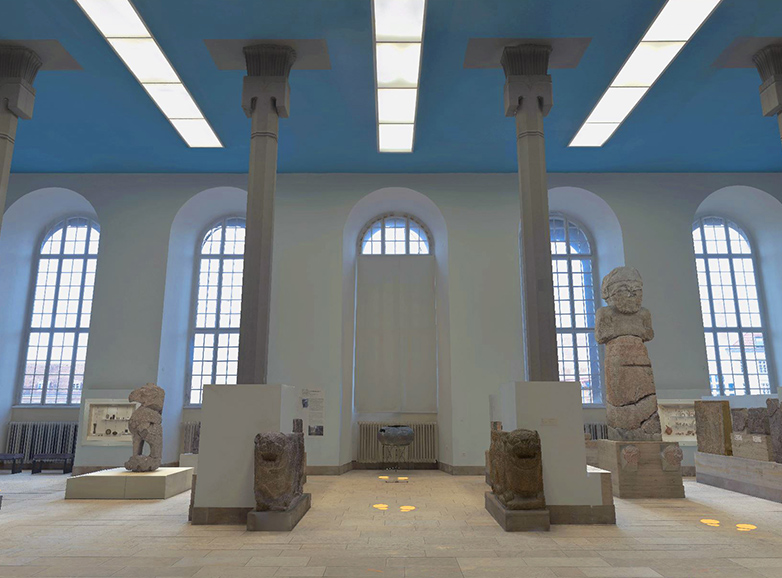
Schloss Mannheim VR
A room hardly anyone has been allowed to enter for decades: at Mannheim Baroque Palace, virtual reality opens the door to the library of Electress Elisabeth Auguste: a barrier-free journey back to the 18th century.
The refuge of Elisabeth Auguste
In 1755, Elector Carl Theodor had the library cabinet built for his wife Elisabeth Auguste, designed by court architect Nicolas de Pigage. Up to 1,000 books were kept here, hidden behind carved wooden panels. One of the few palace rooms to survive the destruction of the Second World War almost in its original state, the cabinet remains closed to the public for conservation reasons.
Our VR application makes the Electress’s intimate refuge accessible to all visitors of the Baroque palace. After the “Midnight Theatre” at Ludwigsburg Residential Palace, it is already the second virtual reality project we have had the pleasure of creating for the Staatliche Schlösser und Gärten Baden-Württemberg.
Photogrammetry in the cabinet
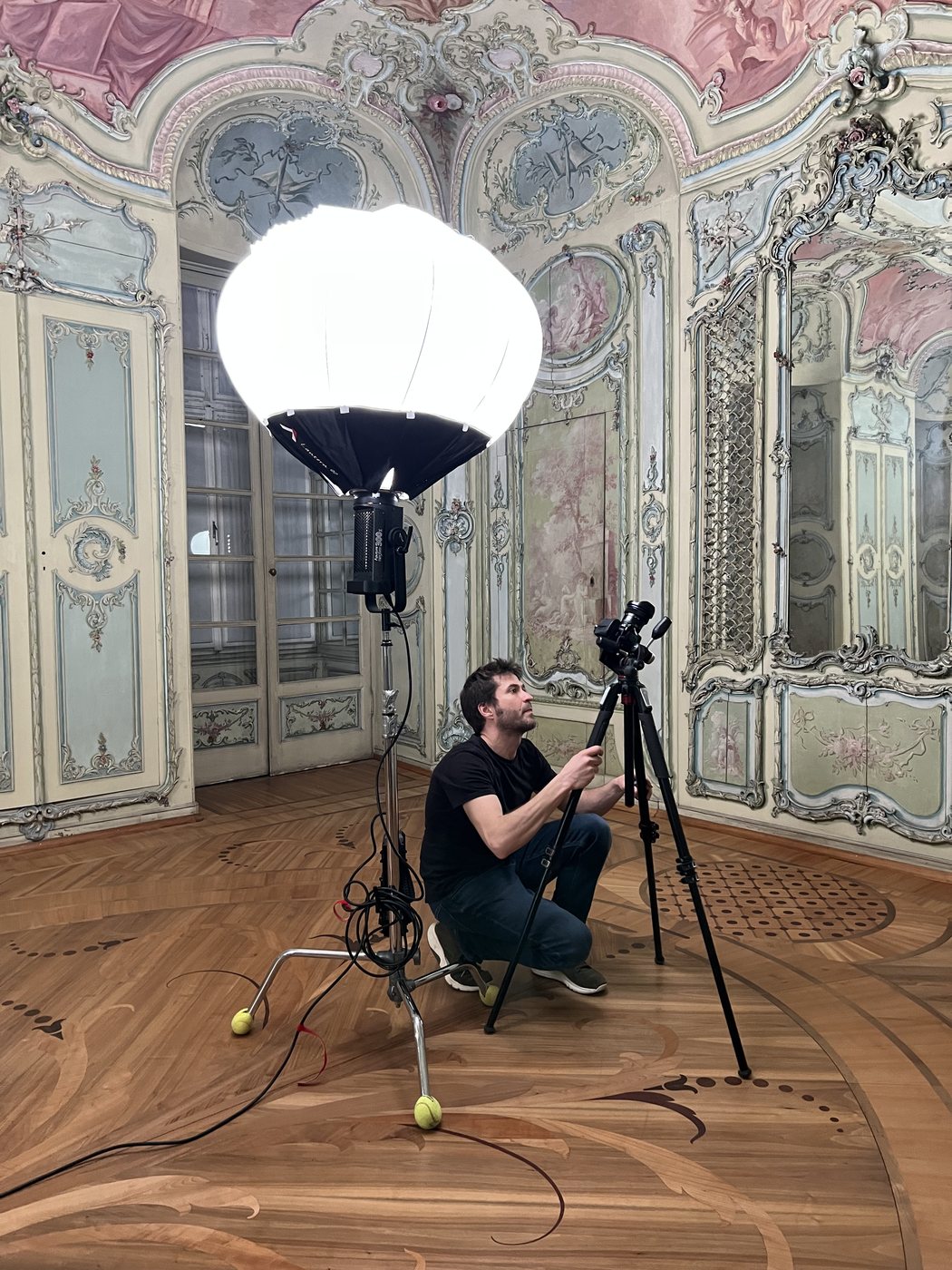
To transfer the room’s artistry faithfully into the virtual world, we captured the library cabinet photogrammetrically: thousands of high-resolution, precisely lit photographs were computed into a photorealistic 3D model.
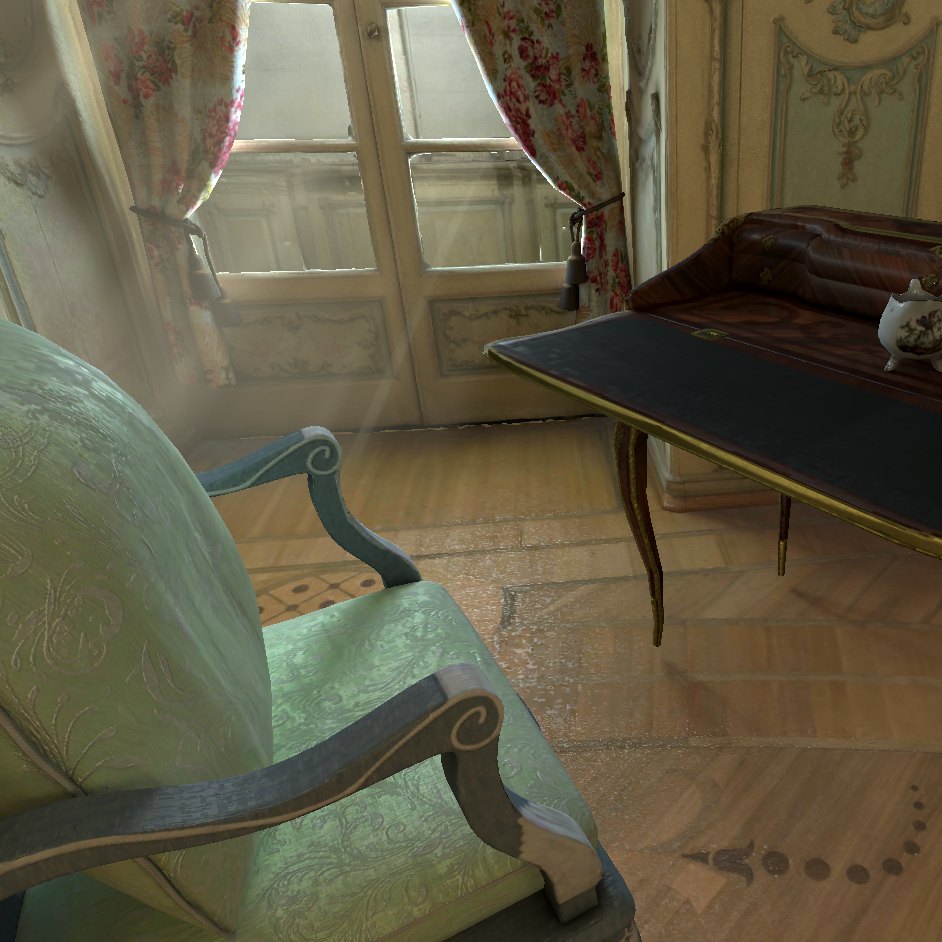
Hidden bookshelves, the delicate ceiling stucco and the carved wooden panels are preserved down to the last detail, and the muses and allegories of the ceiling paintings unfold their cheerful ambience inside the VR headset, too.
In the Electress’s own words
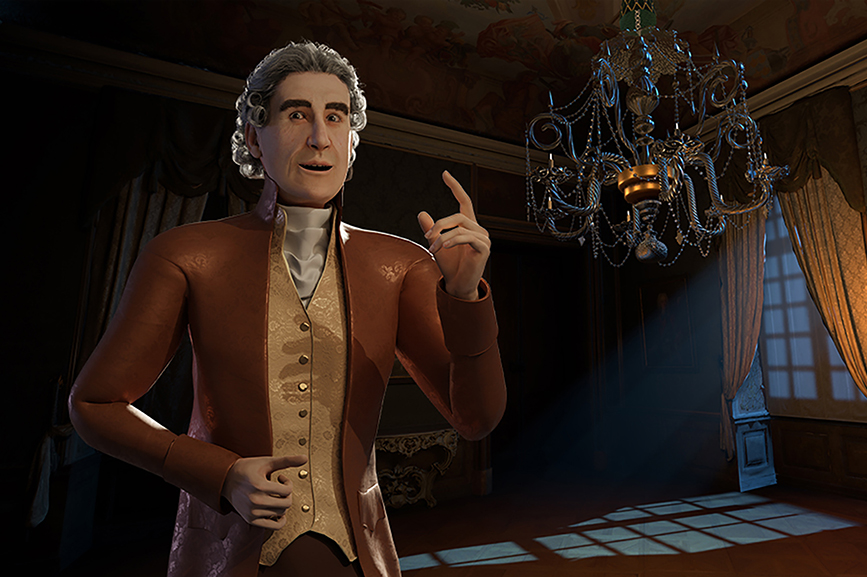
Inside the application, visitors listen to quotations from Elisabeth Auguste’s letters and immerse themselves in the Electress’s world of thought. The immersive journey tells of the retreat of one of the most influential women of the 18th century, no prior knowledge required, plenty of atmosphere included.
The room did not always look the way photogrammetry captures it today. Wallpapers, colours and furnishings were recreated for the VR application to match their 18th-century state, so visitors enter the cabinet just as Elisabeth Auguste knew it. And those who browse attentively will even discover hidden love letters on the virtual tour.
A virtual visit without barriers
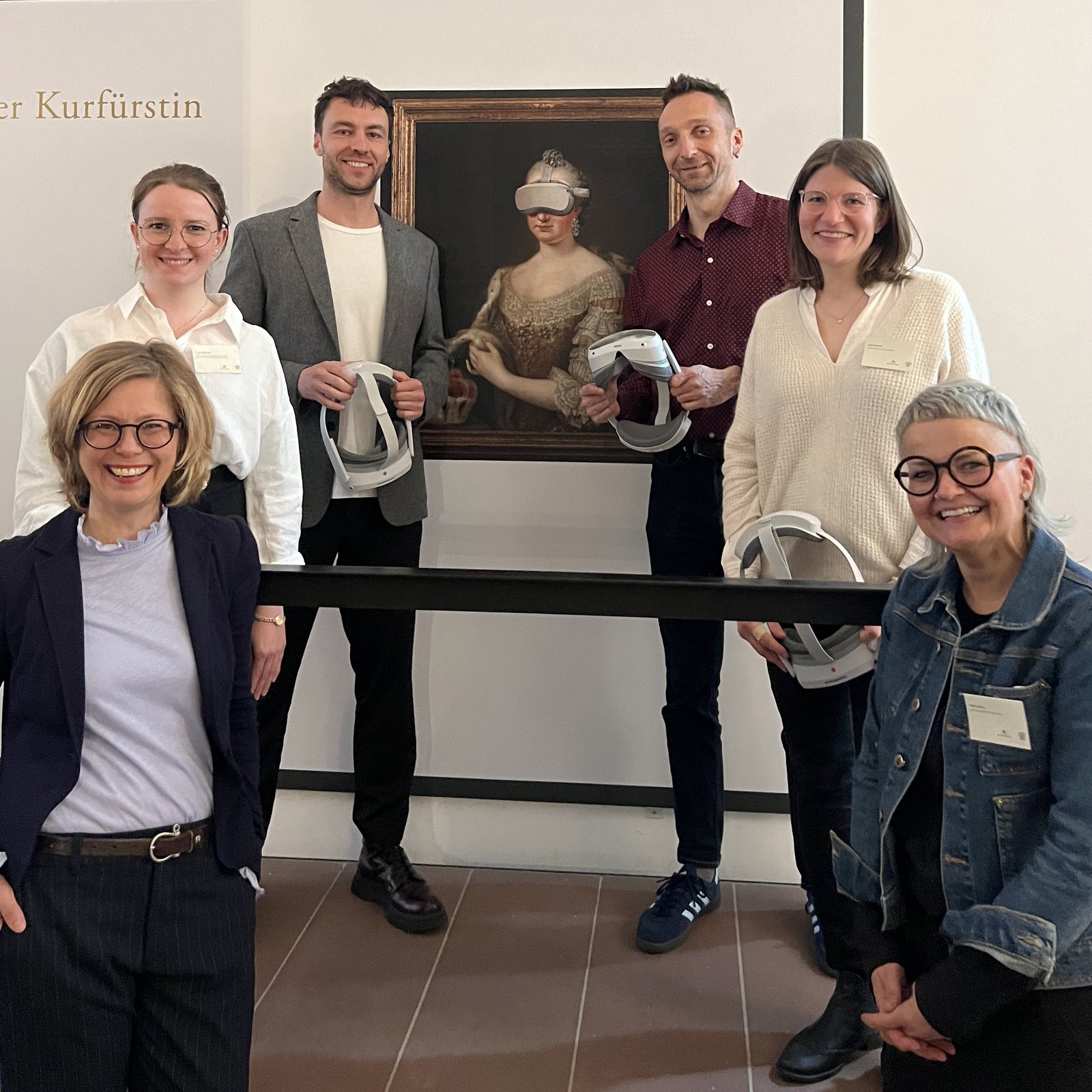
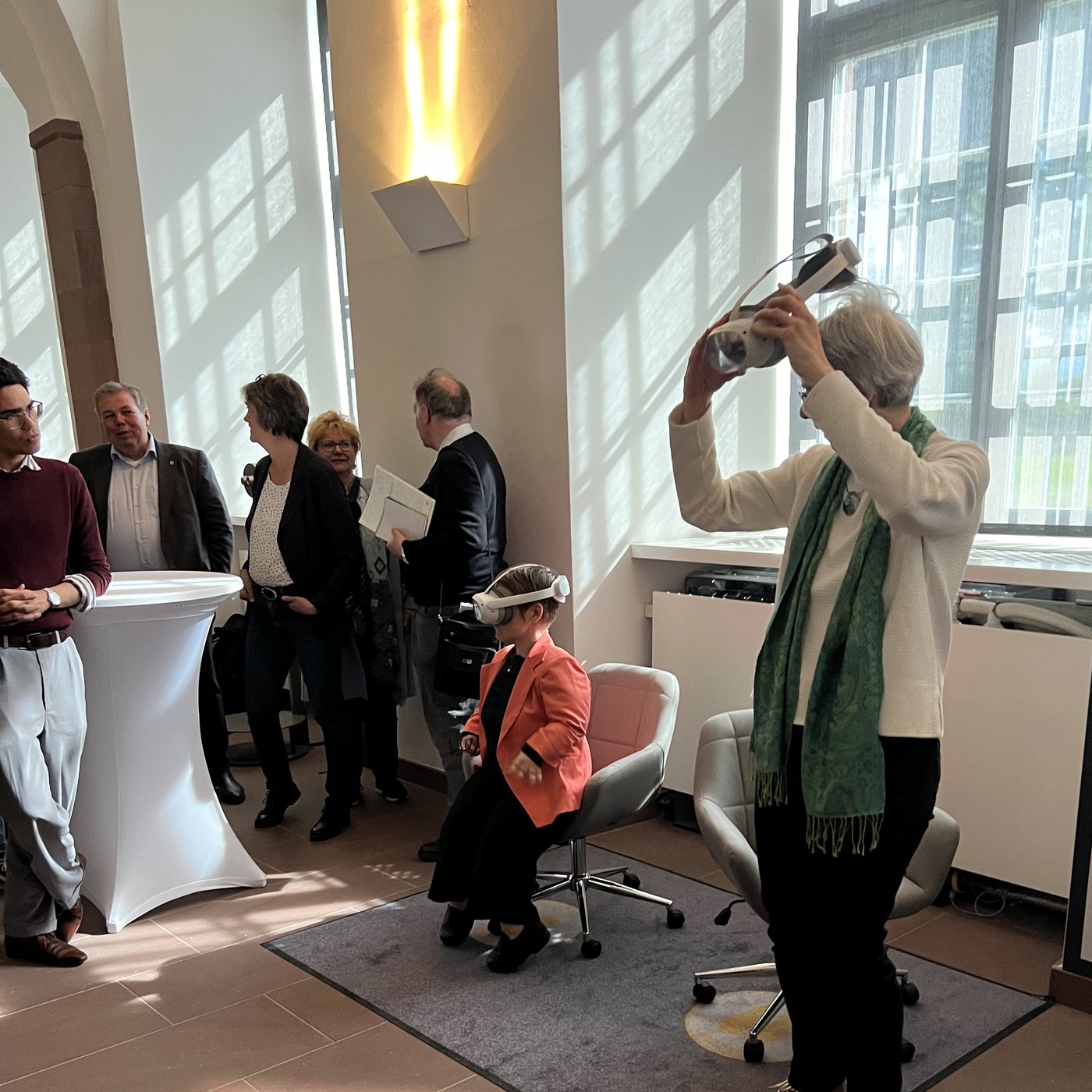
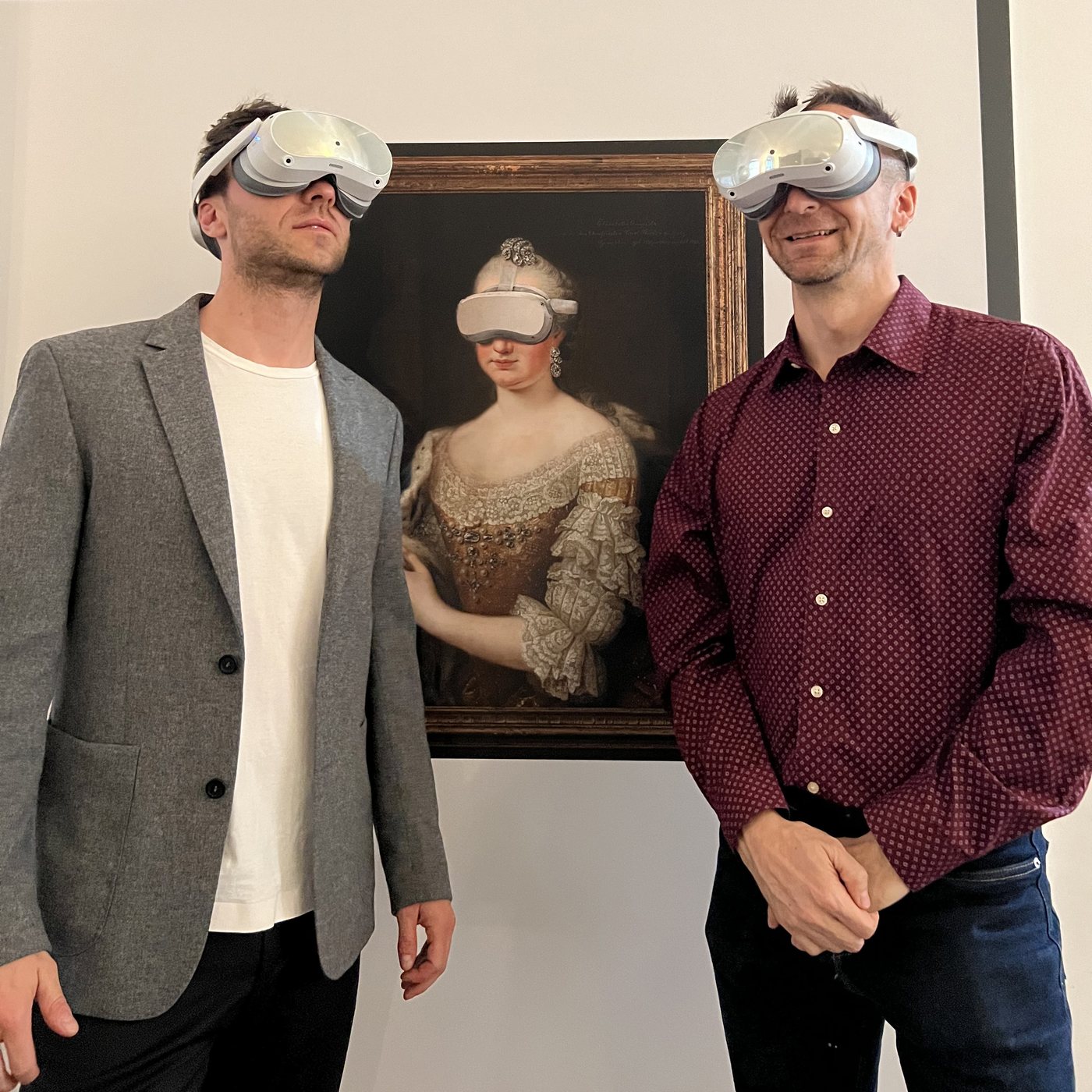
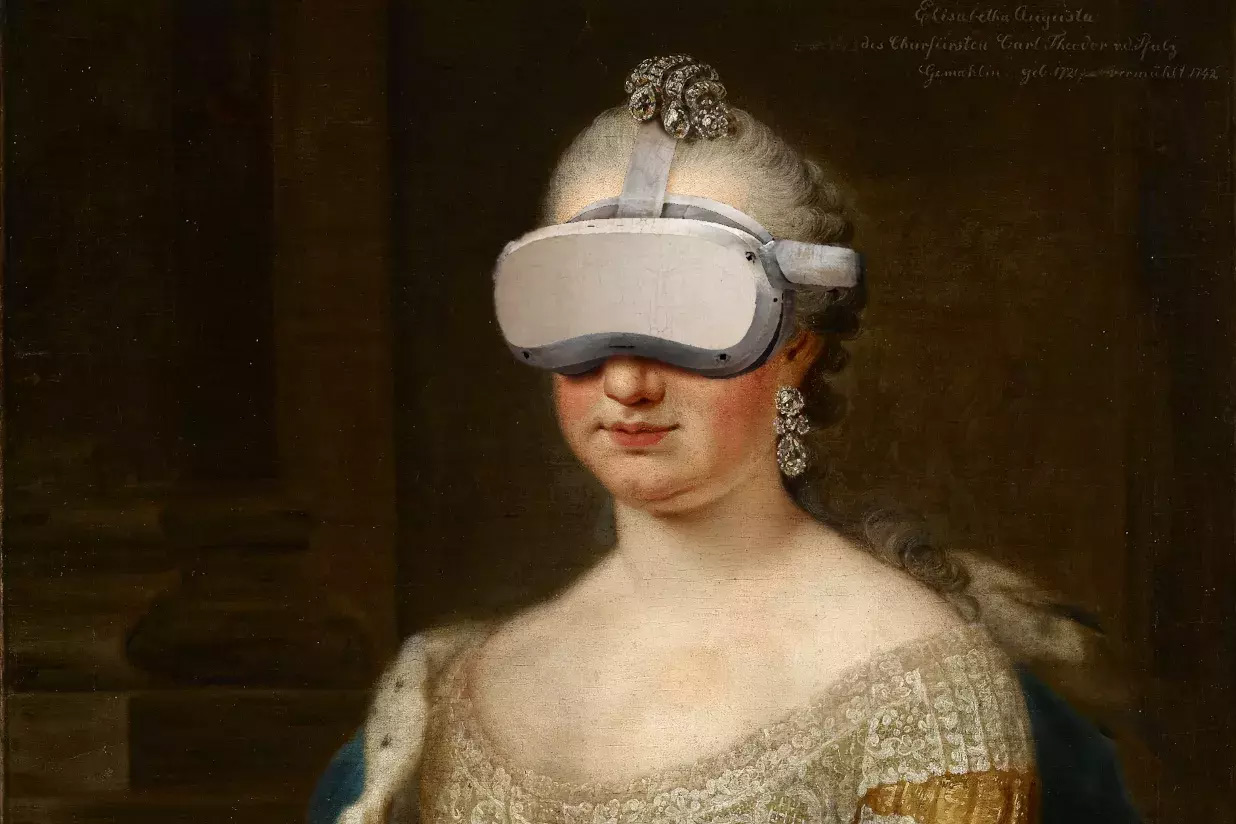
The application runs standalone on VR headsets on site, with no registration and no extra cost. It is controlled entirely by gaze, making the tour suitable for people with hearing, vision, reading and mobility impairments; visitors who cannot wear a headset experience the same content on a tablet. As part of the state programme “Virtual reconstruction of cultural properties”, the journey through time has been open to visitors of Mannheim Baroque Palace since 2024. At the premiere, the invited guests tried it for themselves, and even the Electress in her portrait wore a headset for a few photos.